

A featured contribution from Leadership Perspectives: a curated forum reserved for leaders nominated by our subscribers and vetted by the Construction Tech Review Advisory Board.

Csiro's Data61
Would you take a Trust Leap in 'Distributed Trust'?
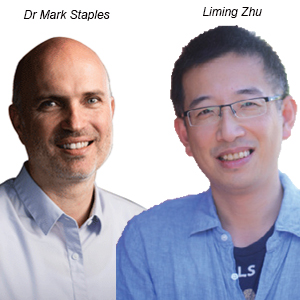
Dr. Mark Staples
However, when organizations combine their data, they are trusting something they do not have full control of. This underpins the second societal change – the shift from institutional trust to “distributed trust”.
Various surveys show that trust in institutions— like government, media, businesses and NGOs — are at an all-time low, while new platforms are enabling individuals to trust and transact with strangers across sectors including transport (Uber), accommodation (Airbnb) and money (cryptocurrency). Bitcoin and the blockchain technology behind it support a form of distributed trust, invented precisely because the erosion of centralized trust in financial institutions immediately after the 2008 GFC.
Blockchain, or distributed ledger technology, is a key area of research for CSIRO’s Data61 and a report released last year examines how blockchain systems can support new markets and businesses models. These distributed trust technologies (like blockchain) enable strangers and firms to work together reliably, despite limited trust in each other in increasingly complex, globalized supply and value chains. Industry boundaries are blurring as some firms leverage the insights gained from their customers to enter and reconfigure adjacent industry structures. This often requires a firm to form new value chain relationships rapidly with unfamiliar suppliers, which can benefit from distributed trust technologies.
But why have blockchain and distributed ledger technologies not yet taken off in the enterprise space? I think there are three reasons.
Firstly, history shows that general-purpose technologies, such as electricity, telecommunication, and computers, often take a surprisingly long time to be widely adopted because they also need to be instantiated and integrated with each of their various applications. For distributed trust technologies, what is really important is the mega-trend of the growing capacity for organizations to share data, perform joint analytics and transact.
Distributed trust technologies enable strangers and firms to work together reliably, despite limited trust in each other in increasingly complex and globalised supply and value chains
Enterprise adoption of distributed trust technologies will happen. It’s just a matter of how fast.
The second reason is that there are still technical challenges being tackled by research organizations and industry. For example, sharing information on-chain (even it is encrypted, de-identified or only meta-data) can still leak private or commercially-sensitive information. Provable privacy, and its broad use for sensitive information, is an active field of research. On the other hand, IT leaders also need to take a risk-based approach in managing trade-offs between data sharing risk and benefits gained. Advancements in zero-knowledge proof, homomorphic encryption and secure multi-party computation are making secure joint analytics a feasible reality. An example of this is N1 Analytics, a startup from Data61 that allows organizations to collaborate on data analytics safely by keeping their commercial information confidential and their customer information private. This maturing set of new technology is often referred as “Confidential Computing”.
 Another technical challenge is in regard to inevitable “bugs” in blockchain applications, not necessarily in the blockchain technology itself. These bugs are particularly tricky in the case of “smart contracts”, which are small programs that are replicated and executed on the blockchain. Due to the nature of distributed trust and consensus, smart contracts cannot be easily terminated and re-deployed if something goes wrong. Nonetheless, these small programs are amenable to “formal verification”, another area of active research where the correctness of programs is mathematically proven. This can provide much greater confidence than testing, which can never give 100 percent guarantees.
 The third and final reason is that humans and organizations sometimes need a “trust leap” when adopting new technologies and new ways of doing business. It is important that our IT leaders have a mindset of experimentation and sometimes take that trust leap. It can help when we use the “strangely familiar” principle when introducing new technologies. For new technology, the question is often not what it can or cannot do “functionally”, but instead whether it has radically improved non-functional properties (performance, interoperability, integrity, security). Objectively comparing blockchain with traditional database technologies along the lines of these non-functional properties can help to build a solid business case for appropriate adoption.
So, would you take a trust leap into this strangely familiar but new world of distributed trust?
The articles from these contributors are based on their personal expertise and viewpoints, and do not necessarily reflect the opinions of their employers or affiliated organizations.
